|
back to annuity rates
 |
Annuity Rates Chart for February 2012 Last reviewed: 20th February 2012
Fig 1 below shows the change in annuity rates chart over the last 12 months and the rate for
February 2012: |
| |
| Annuity Rates Chart for £100,000, male, age 65, single, level |
| Latest rate: |
|
1 month change: |
|
3 month change: |
|
6 month change: |
|
1 year change: |
|
| £6,112 pa |
|
 |
|
£103 / 1.7% |
|
|
 |
|
£140 / 2.3% |
|
|
 |
|
£263 / 4.1% |
|
|
 |
|
£478 / 7.2% |
|
|
|
|
 |
| Fig 1: Annuity rates chart of income for 12 months to February 2012 |
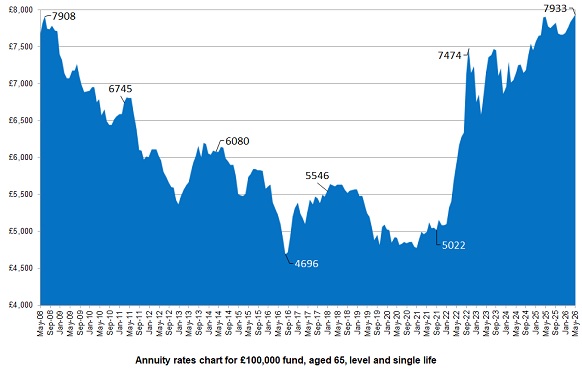
In fig 1 the annuity rates chart is our benchmark example with £100,000 to purchase an annuity for a 65 year old male on a single life, level and no guaranteed period. For February 2012 it shows that our benchmark annuity rates chart has been steady fro the last couple of months.
Over this time the 15-year gilt yields reduced by 27 basis points by the end of January 2012 and increase by 23 basis points by 3rd February 2012. This means our benchmark annuity rates chart is likely to remain at current levels as it is only 1.8% higher than expected and providers may not feel there is a need to reduce rates. See Annuity Rates 2012 for the latest updates.
As a general rule a 50 basis point change in the gilt yields will result in a 5.0% change in the annuity rates so if gilt yields continue to rise it will be very unlikely that annuity rates will decrease in the short term. For smoker annuity rates they have decreased by 3.2% in the last two months compared to gilt yields 47 basis points before the recent increases. Therefore smoker rates should increase by about 0.8% in February.
Equity markets have been positive over the past two months and in particular due to positive UK economic data showing strong and unexpected growth that could mean greater investments out of UK government gilts and into equities which could increase pension funds and annuity rates for pensioners. However, the difficult issues ahead are the Eurozone debt crisis and Quantitative Easing which could threaten to lower gilt yields and lower annuity rates.
|
| |
|
|
|
|